It does not take the knowledge of a rocket scientist or of a team of professors to articulate that there is a link between poverty and health. Specifically, there is a link between obesity and its risk factors and poverty.
Animals. Cooking. Gardening. And some Randomness.
It does not take the knowledge of a rocket scientist or of a team of professors to articulate that there is a link between poverty and health. Specifically, there is a link between obesity and its risk factors and poverty.
In our side garden, we’ve planted basil, summer savory, rosemary, sage, curly parsley, flat-leaf parsley, ground cherries, and for the first time ever, sunberries. Has anyone ever tasted sunberries? We bought seeds on a whim, so we’re very curious to try them. We also planted a few extra tomato plants, and we’re still planning to plant lemongrass, peppermint, and cilantro.
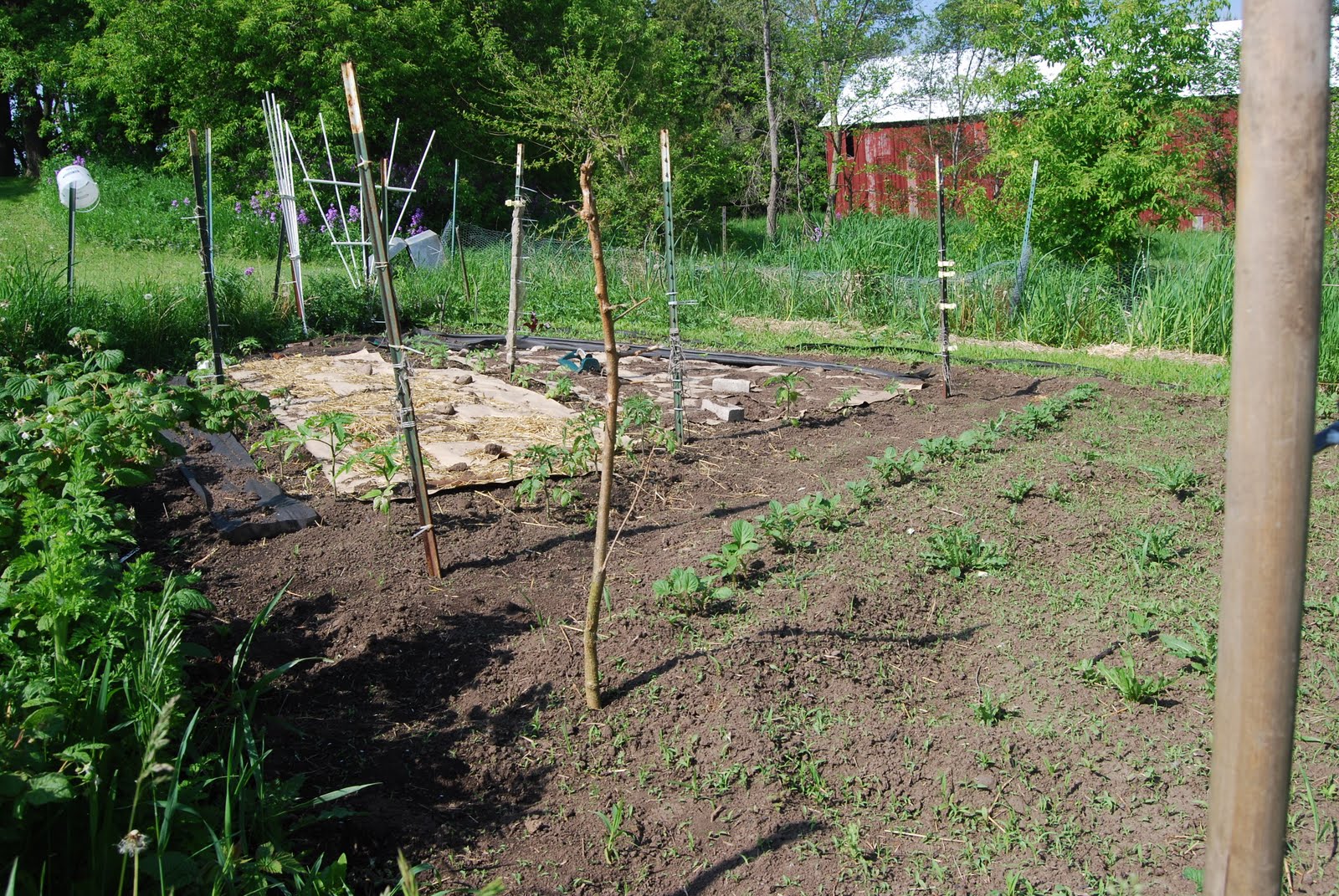
Up in front, we have a box of Swiss chard growing. And our asparagus bed is looking fabulous. Next year, we should be able harvest asparagus. For the last season, this year, we utlized the space between the rows for planting. Currently, 66 onions are happily growing in the asparagus bed. Next year, awesomely, there won’t be room for any extra plantings there!
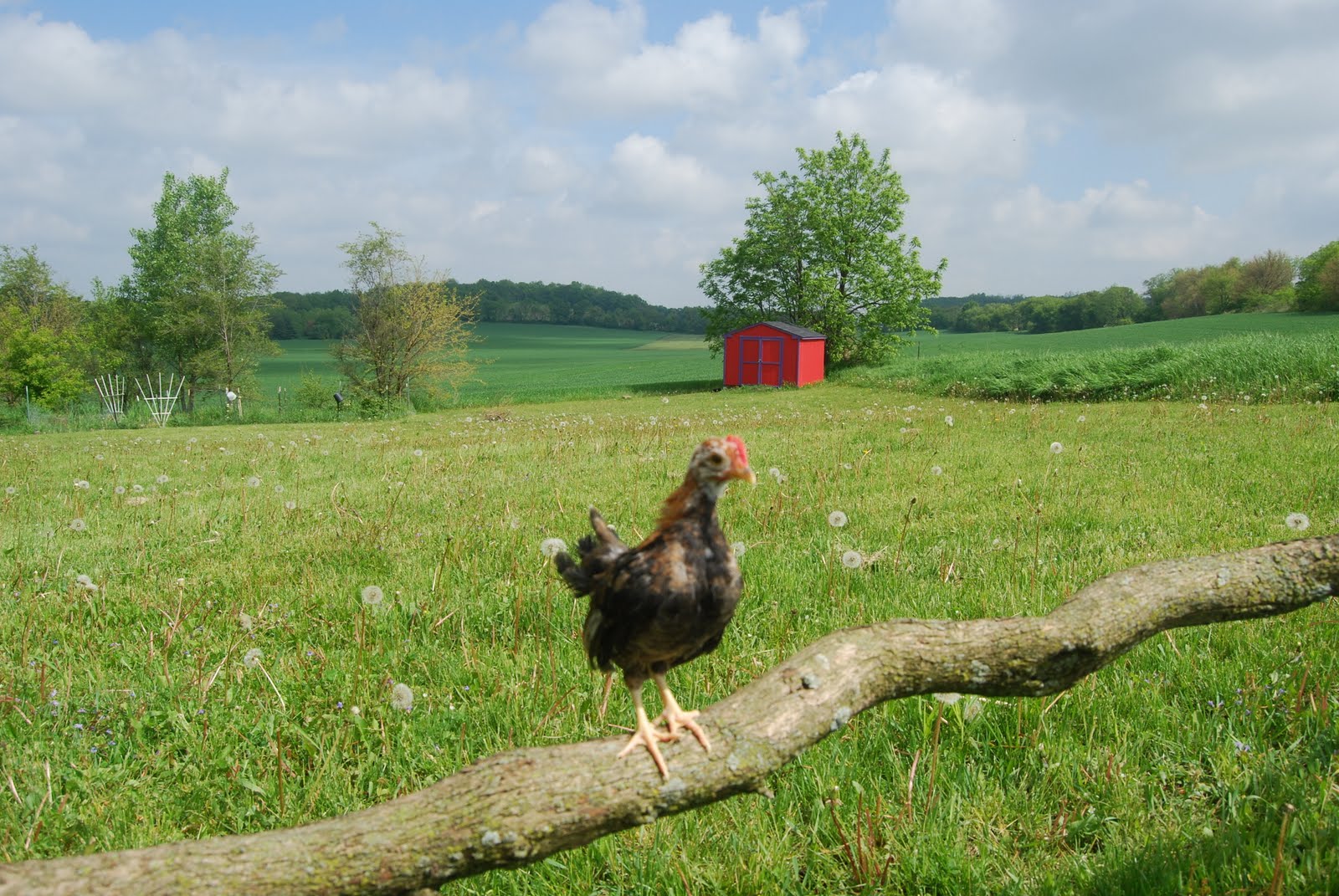
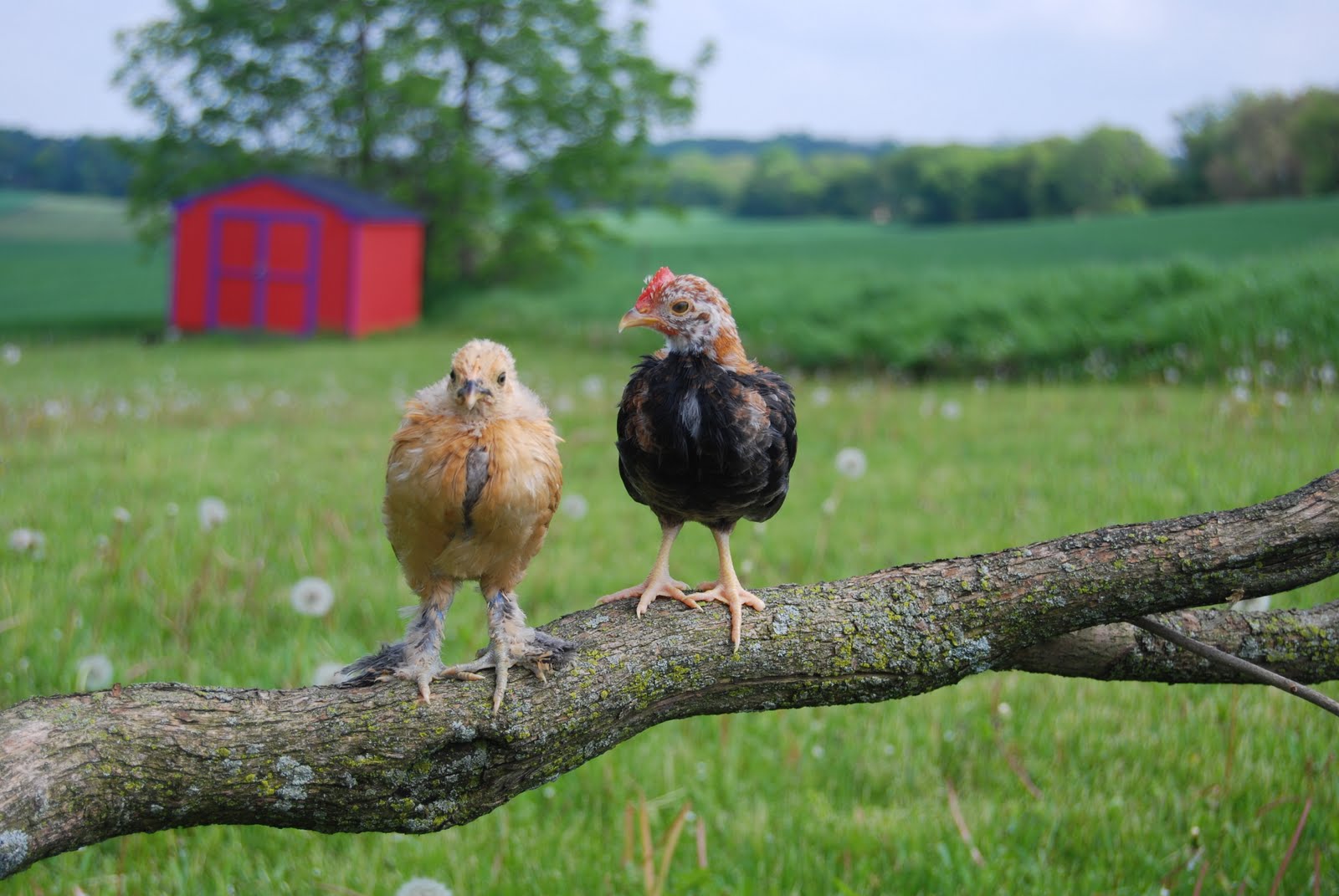
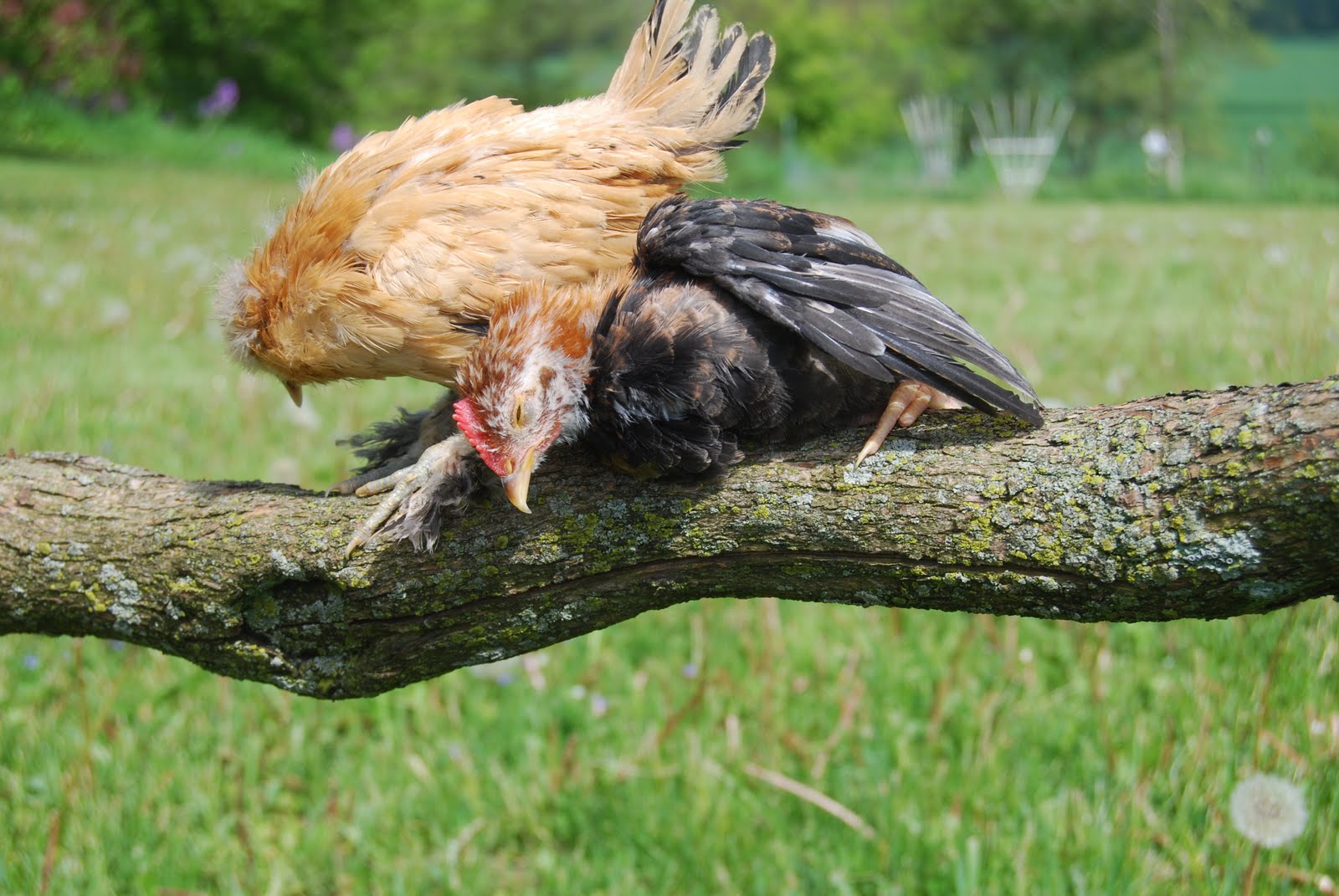
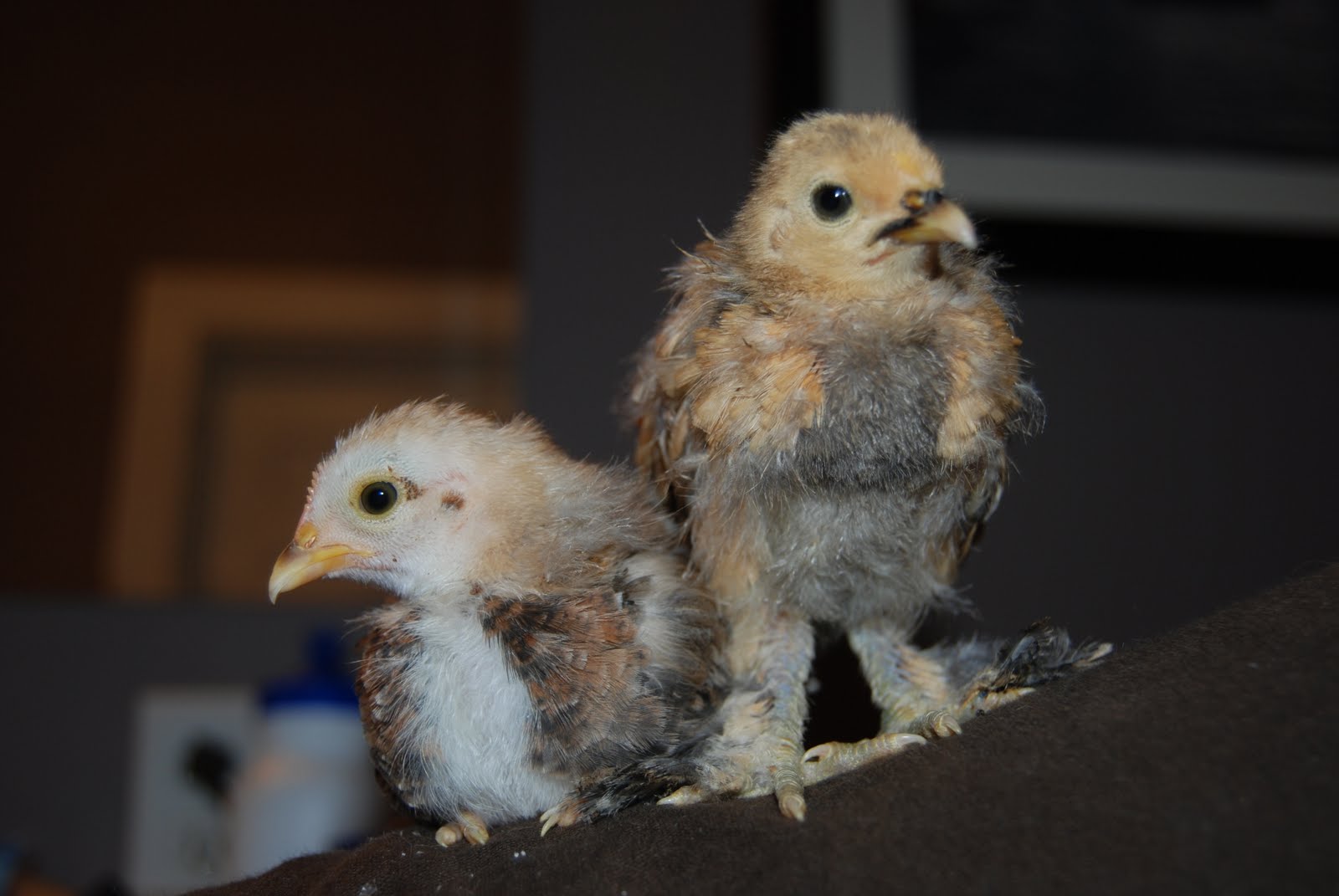
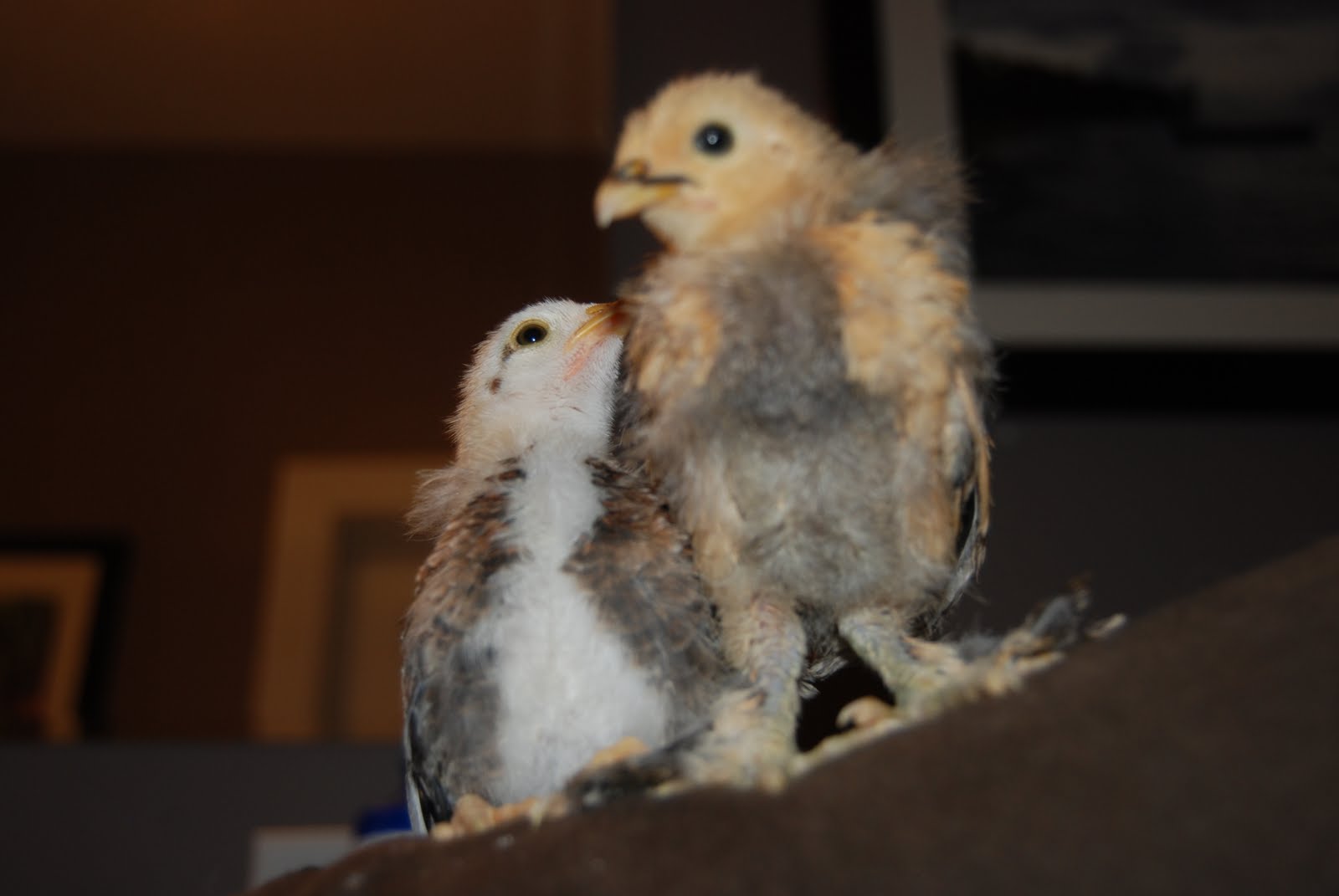
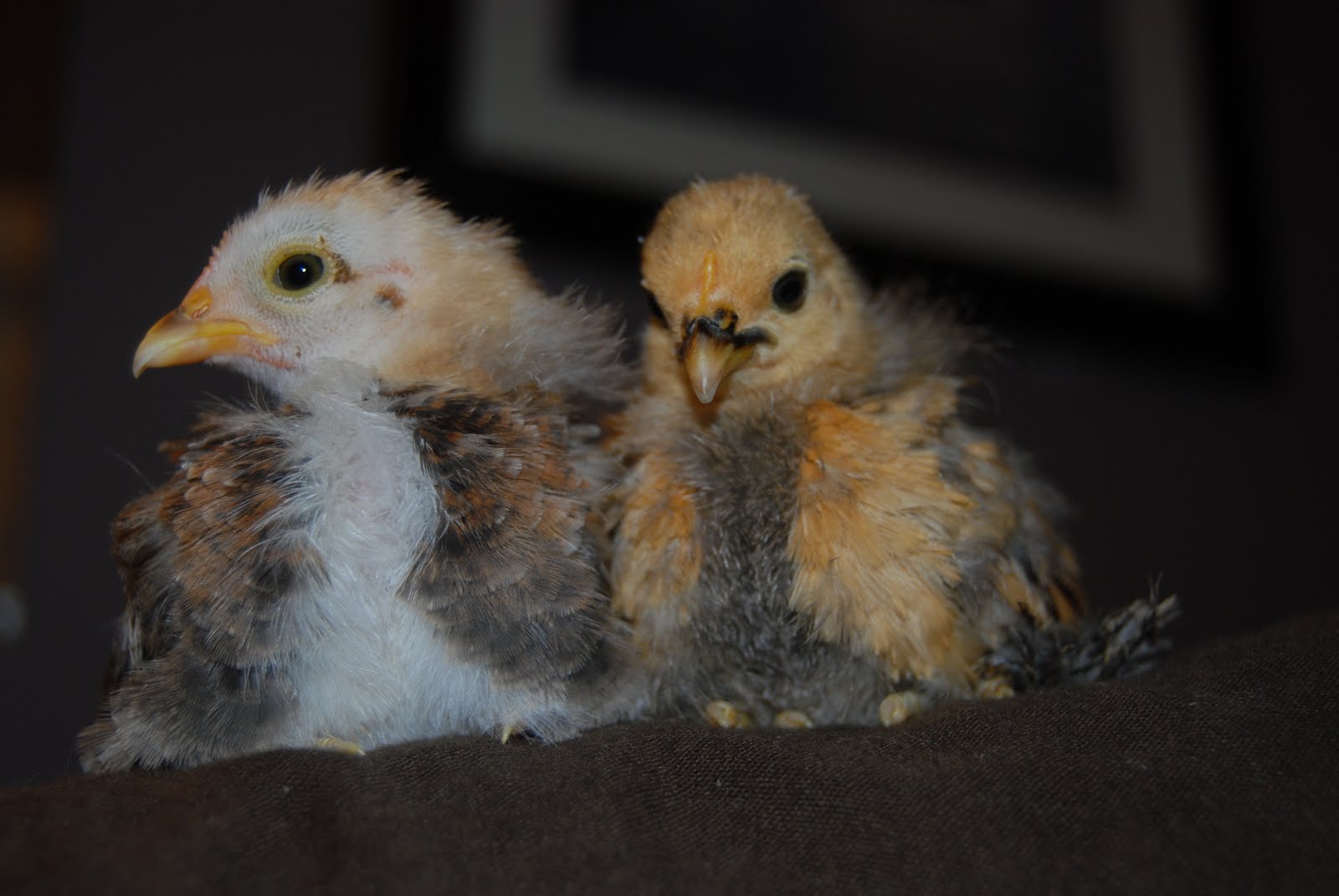
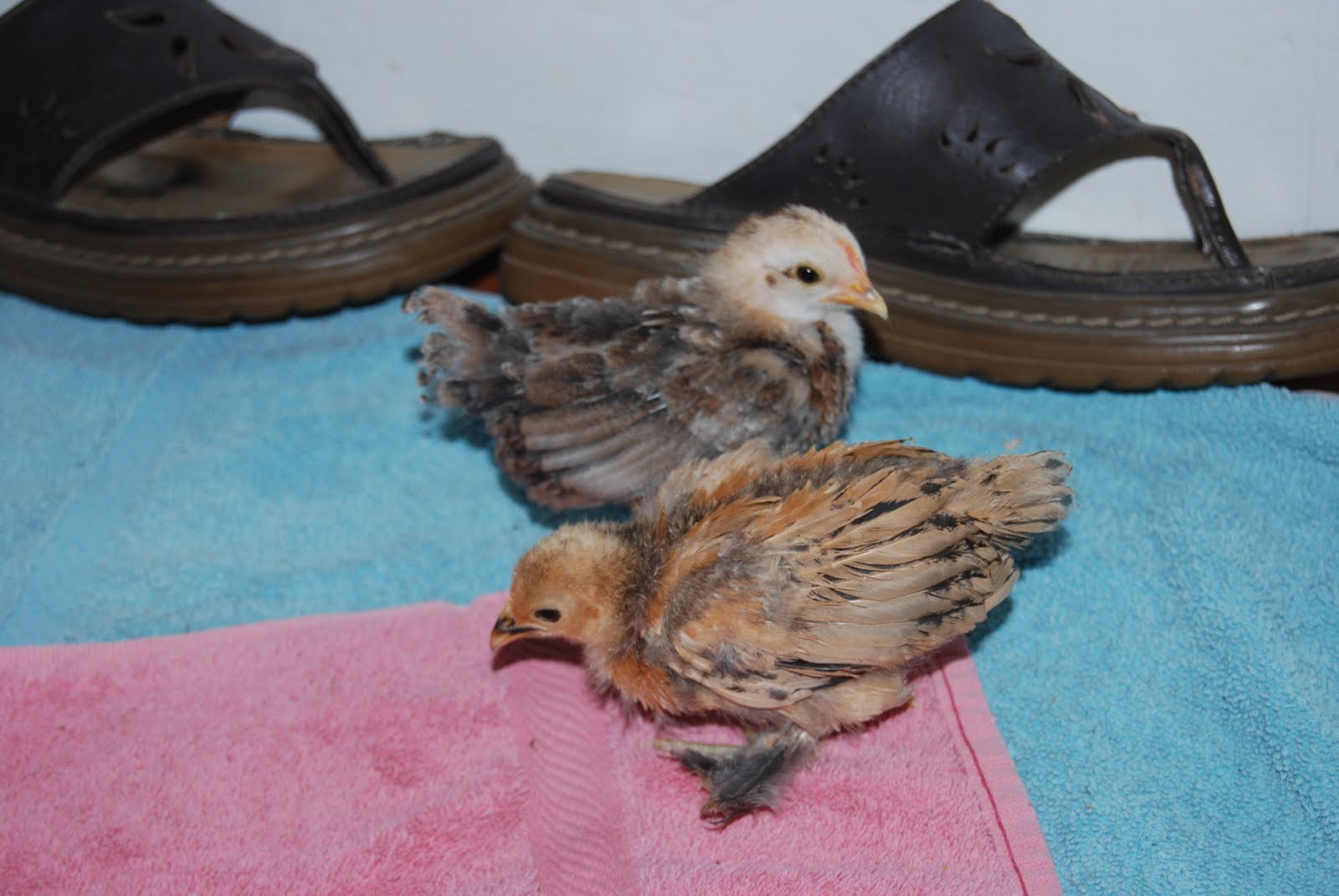
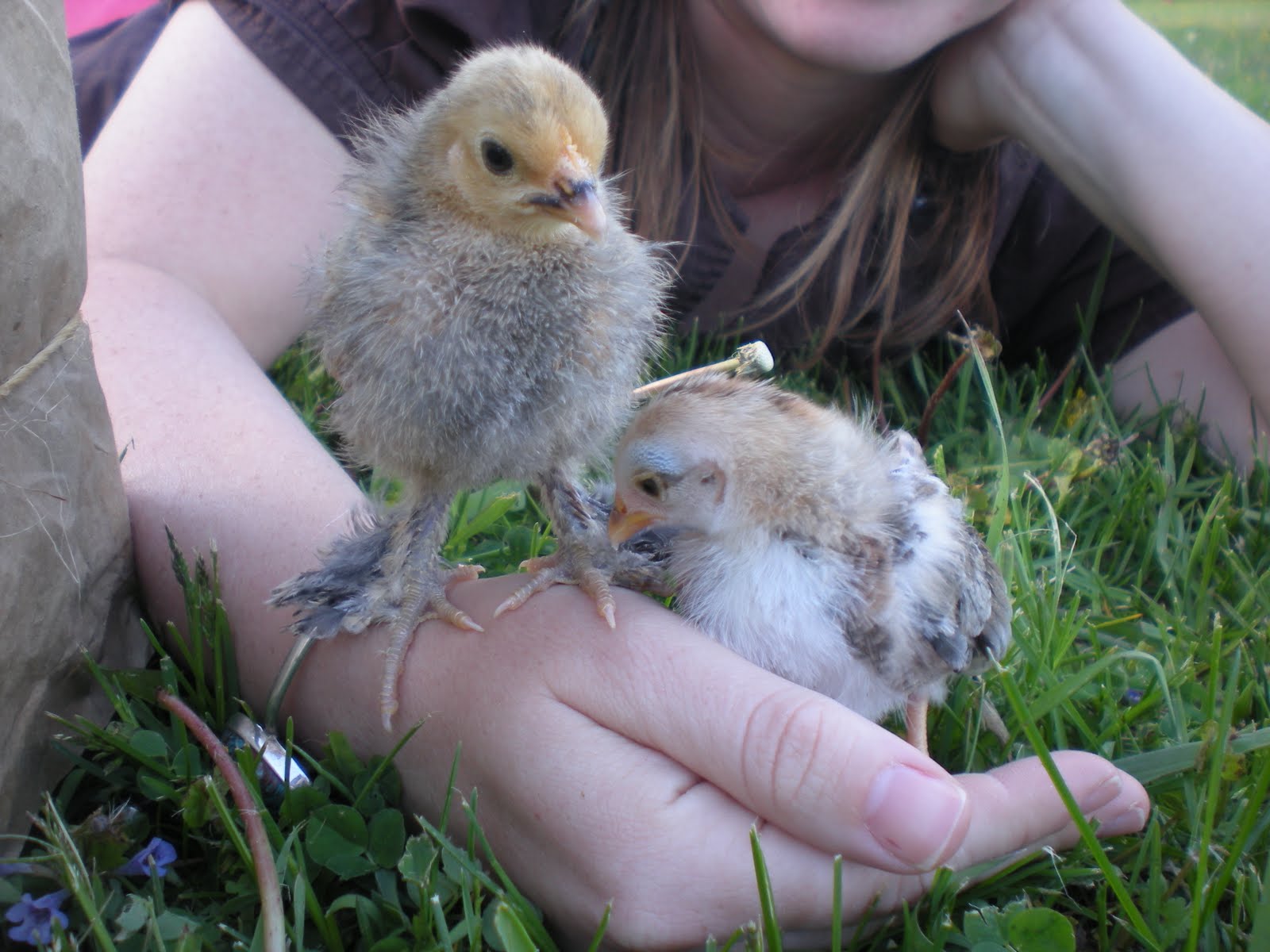
Ani and Zappa love the outdoors, but interestingly enough, when we are out there, they tend to just want to sit on my lap and be held. Zappa especially likes to sit in my hand while I nuzzle under his chin with my other hand. He quickly falls asleep during this ritual. They are the best of friends; if Zappa is getting the love, Ani feels she must jump up and cuddle in too.
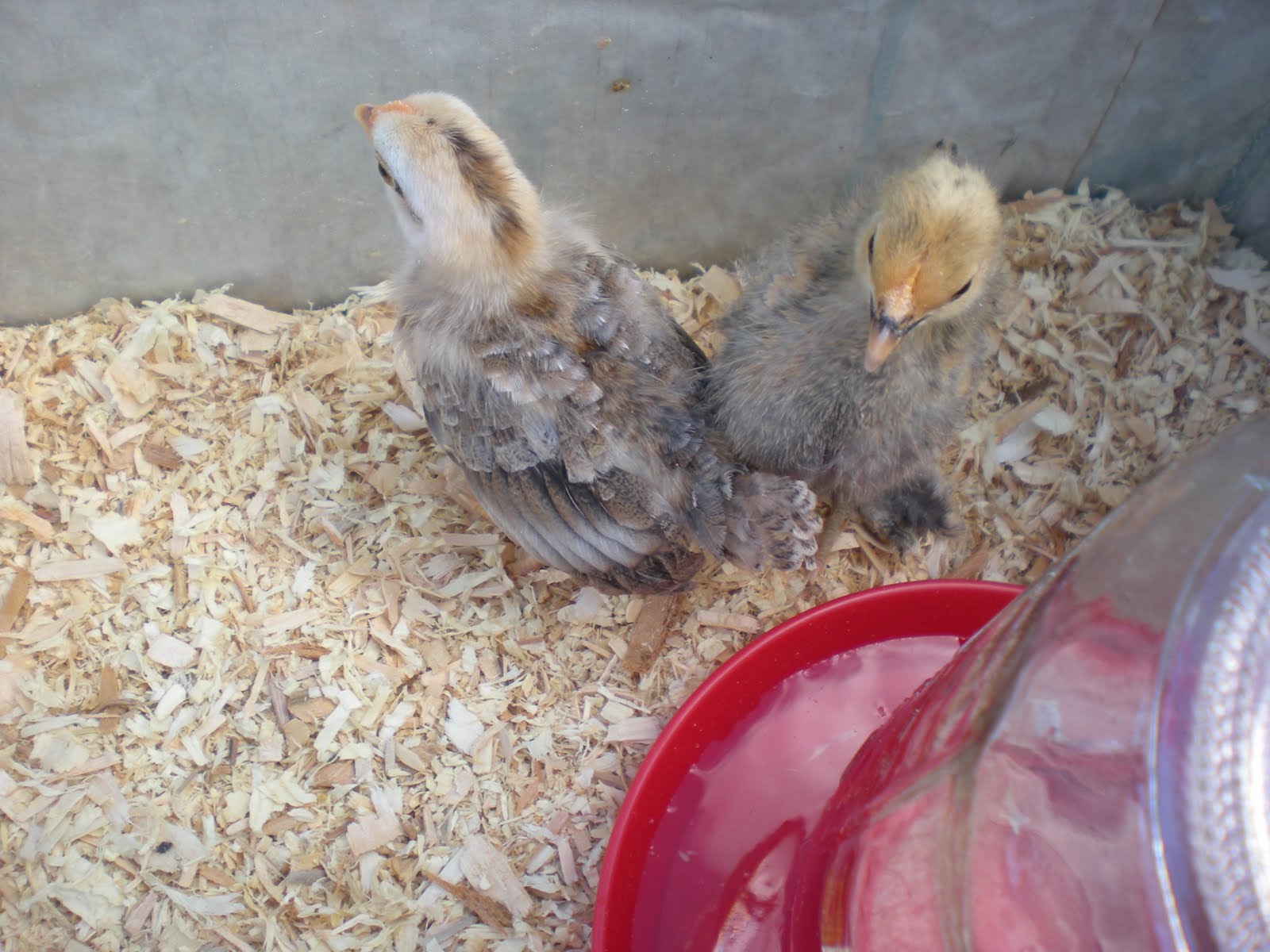
It’s oddly heartbreaking to put them back in their cage when we want to come in. They chirp nonstop as we carry them back . To accomodate their growth, we’ve transferred them from our smaller cage into a large Tupperware container with hardware cloth on the top. When we’re home, they enjoy the skylights in the living room while the cats try to determine if the peepers are lunch or entertainment! 🙂 The chicks are scared of the dark. At night, we’ve tried turning off the heat lamp (now that they’re okay at room temperature), but they cry and peep, and so, I haven’t been able to officially turn off the bathroom light for the whole night. Soon! With our first CSA box being delivered last Saturday, we decided to try a few new recipes. Of course, the first resource that we grabbed was the From Asparagus to Zucchini Cookbook. Our first delicious surprise was a beverage – Rhubarbade. After an awesome five-mile run last week, this drink quenched every bit of my gigantic thirst. I also imagine that it would be great on a hot, sunny day with a little vodka and ice! 🙂
To make it:
1. Puree rhubarb in a food processor or use a juicer.
2. For every two cups of rhubarb liquid, add 3/4 cup (or more or less to taste) of a sweetener and 6 cups of water. We used sucanat (non-refined cane sugar).
3. Stir until sugar or other sweetener is dissolved.
4. Serve iced. Yum!
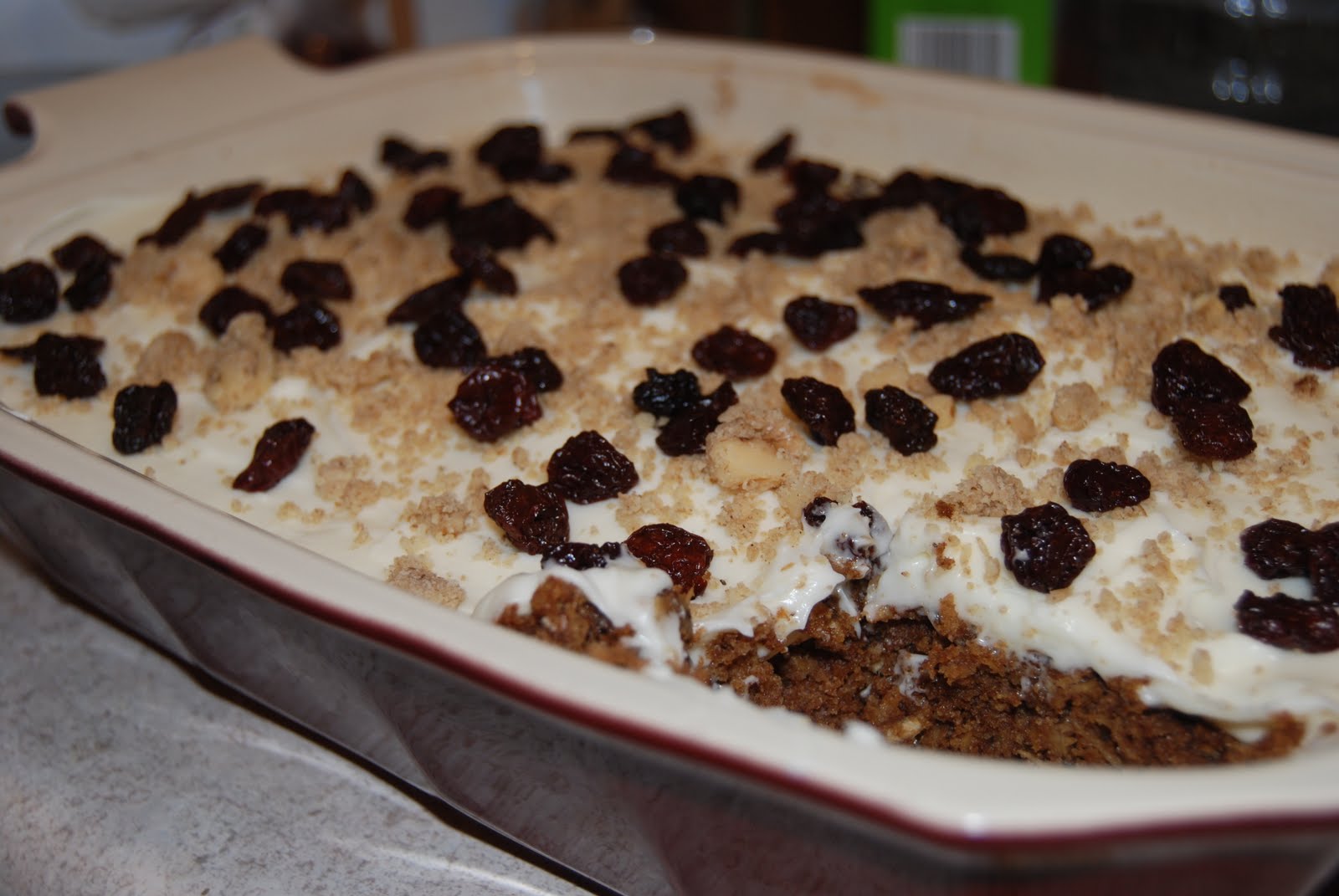
The other sweet surprise that we had was from the same cookbook. Meet Parsnip Cake with Lemon Cream Cheese Icing! Check out the From Asparagus to Zucchini: A Guide to Cooking Farm-Fresh Seasonal Produce for the full recipe. Let me just say: the addition of the dried cherries and chopped walnuts on top of the frosting was perfect!
After seven years of having a CSA box and several years of having a garden, there have been numerous occasions when we’ve let produce go bad! Over the last couple of seasons, we’ve found that throwing the cookbook aside and letting intuition take over is sometimes the best way to utilize all the veggies or fruit that we have on hand.
Tonight, in the wake of the CSA season officially starting, the mad scramble to clear out our freezer in order to make room for the bounties ahead began. We raided our freezer and dumped its remaining bags of produce into a pot along with some dried lentils and curry powder to make a “soup of the week” to get us through Friday.
Years of experience have shown us that the following items help in getting the most out of our produce. Our palette lends itself to ethnic cooking, so for us, these items are very useful for us to have on hand:
Tonight, we “dumped” the following into a pot:
A general rule of thumb is to add two cups of liquid for every cup of lentils.
The nutritional information for one cup of this fast food is below:
|
Nutrition Facts
homemade
soup – 5/11/10 |
|||||
|
Serving Size: 1 serving
|
|||||
|
|
|||||
| Amount Per Serving | |||||
| Calories | 200 | ||||
|
|
|||||
| Total Fat | 0.1g | ||||
| Saturated Fat | 0g | ||||
| Trans Fat | 0g | ||||
| Cholesterol | 0mg | ||||
| Sodium | 156mg | ||||
| Carbohydrate | 38.3g | ||||
| Dietary Fiber | 9.4g | ||||
| Sugars | 5.2g | ||||
| Protein | 13.3g | ||||
|
|
|||||
|
|||||
If you’re a first time CSA member or gardener, or you’re still wondering how you’ll use all of the produce you have, we encourage you to let your cooking inhibitions go, and just begin throwing food in the pot! Usually the results are not only tasty, but good for you!

Mother’s Day and Our First CSA Box of the Year: Two Holidays in One Weekend! Getting our first Harmony Valley Farm CSA vegetable box of the year has become our own little food festival! The anticipation of spring ramps, sweet asparagus, lemony sorrel, and tangy rhubarb begins mid-February, so by the time the first spring box arrives, we’ve usually idealized, planned, and discussed our intentions for the CSA season to exhaustion!
This year our CSA box goals include:
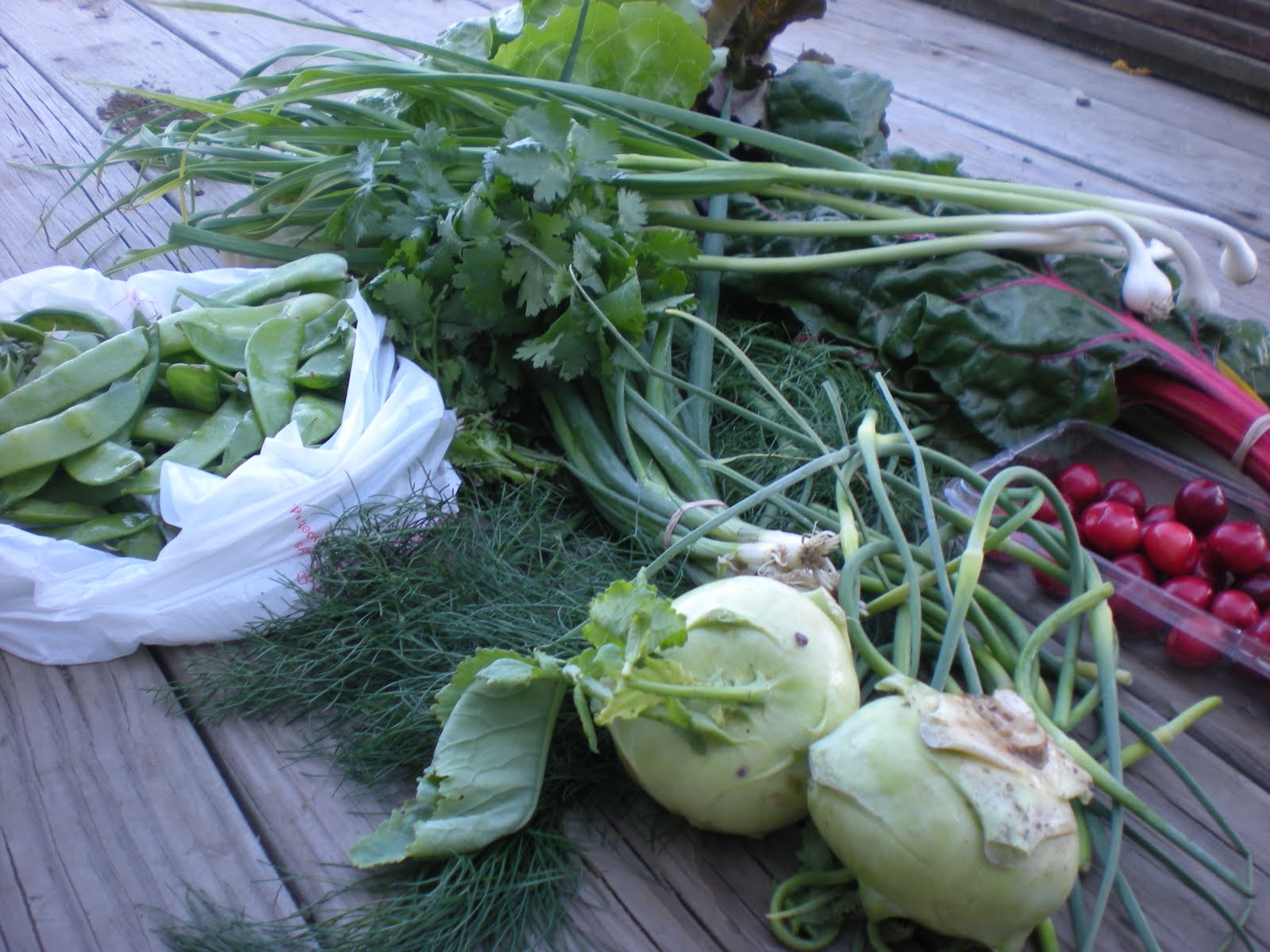
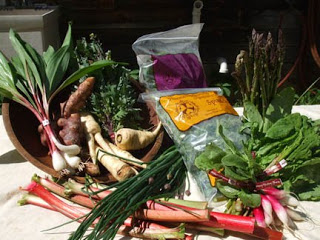
This week, we received:
asparagus
sorrel
ramps (yum!)
spinach
parsnips
Hon Tsai Tai
saute mix (really missed this!)
sunchokes
French Breakfast Radish
Rhubarb
Dogwood
Right after we picked up our box, we went to the Willy Street Co-op for their Brats in the Lot event, sat down with that and a coffee, and made the following menu:
Saturday night: Salad made of spinach, ramps, asparagus, sorrel, radishes, chives, and a homemade lemon vinaigrette (Andy’s parents brought the main course!)
Sunday: Grilled trout and sauteed hon tsai tai
Monday: Veggie burgers and grilled sunchokes
Tuesday: Parsnip Patties (found in the From Asparagus to Zucchini Cookbook (aka the A to Z Cookbook) and saute mix
Wednesday: OUT
Thursday: Stir Fry (dump dinner)
Friday: WE’LL SEE!
Lunches: leftover squash soup (squash from our freezer)
Breakfasts: oatmeal and raisins (obviously not from our CSA box!)
Other: Rhubarbade (from A to Z cookbook)
As a CSA member and as a gardener, the A to Z cookbook is essential; it has become the cooking Bible to use. What cookbooks really assist you in using up your produce? And, those of you who have CSA boxes, what’s your favorite spring goodie?
When I returned home from work, Andy was admiring the elaborate cage he had set up with chicken wire, roosting branches, and lots of space. He placed a thermometer on the cage to monitor the heat and a red lamp over the cage to ensure the chickens’ warmth. The chickens frolicked around, peeping excitedly as they tripped over their water dish and pooped in their food. 
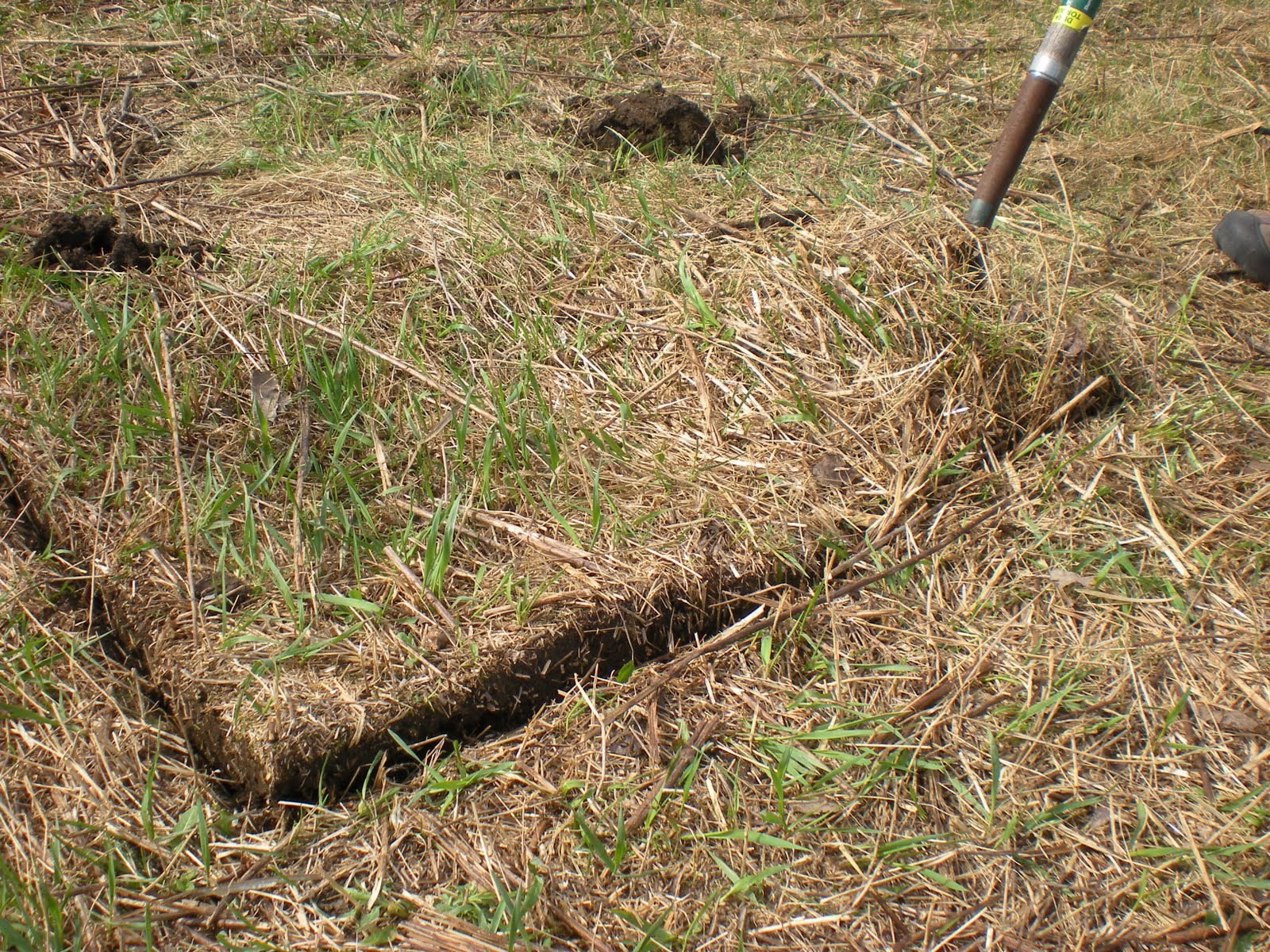
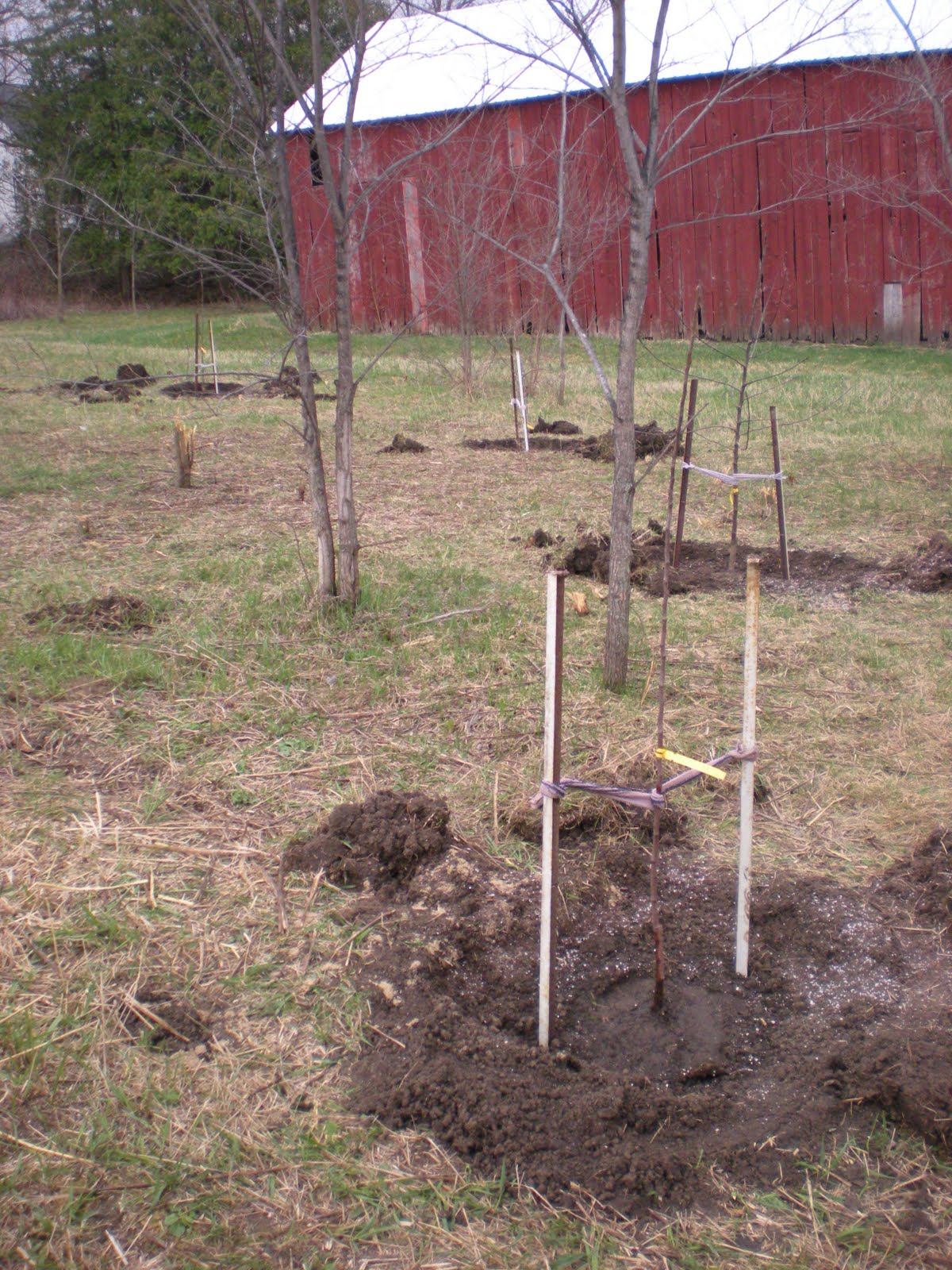
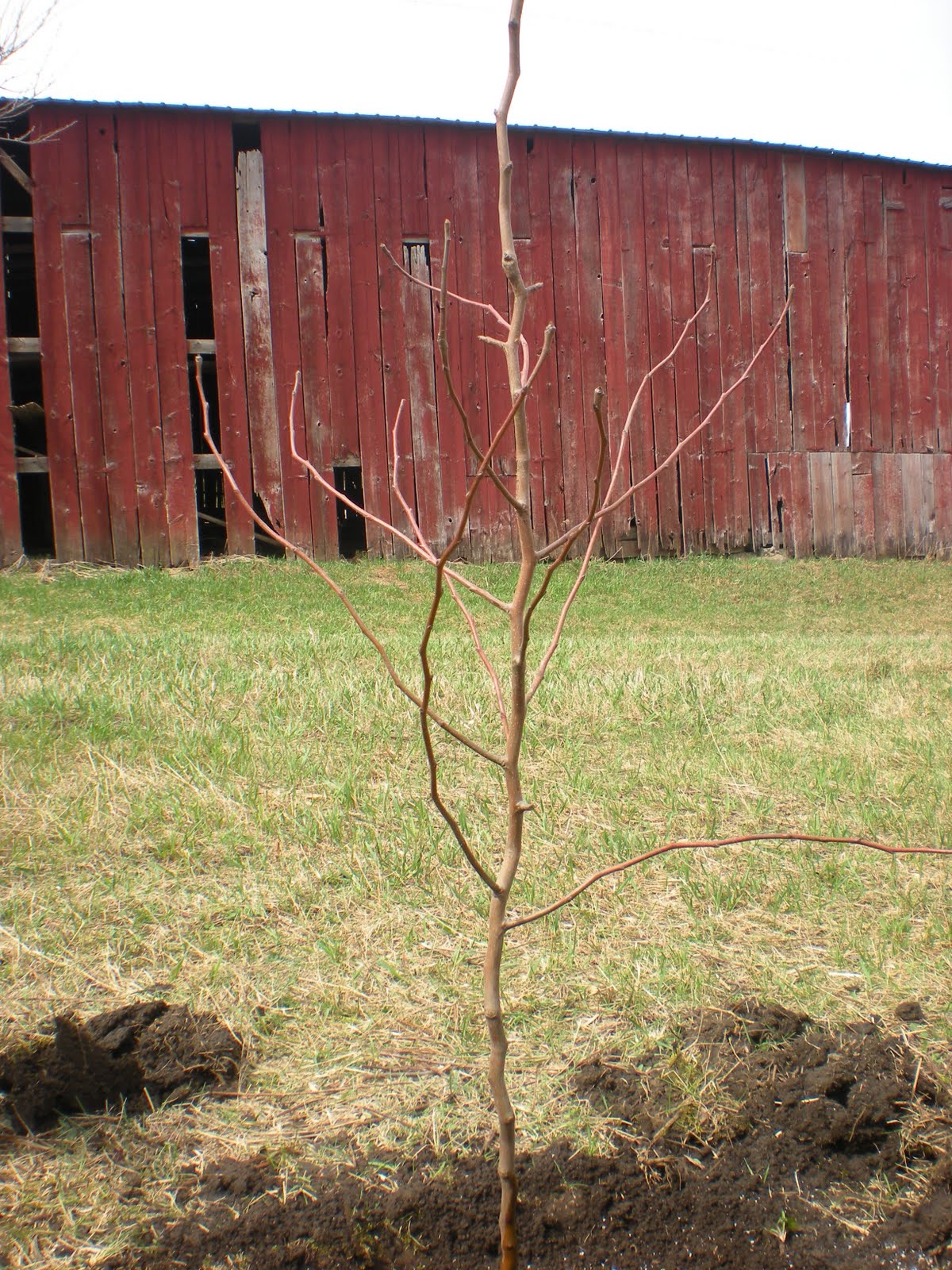
We’ve enjoyed the early spring by cleaning up a neglected part of our yard. Overgrown long before we moved in, about a 1/4 of our yard is now ready to become a mini-orchard. Several mulberry trees are scattered throughout this space, and today, we added two pear trees and two apple trees.
Our fruit-tree-planting experience was next to zilch, so throughout this process we’ve learned quite a bit. One important piece of information which we acquired was that both pear and apple trees need cross pollination to produce fruit. Put simply, an apple tree variety needs a partner of a different variety in order to cross-pollinate. For example, we bought a Honeycrisp apple tree; in order for this tree to thrive and produce fruit, it needs another apple tree variety, so we also bought a Wolf River apple tree. As for the pears, we purchased and planted a Karl’s Favorite pear tree and a Ubileen pear tree. Insects and bees will accomplish the cross pollination if the trees are planted close enough to each other. We planted both our pair of apple trees and our pair of pear trees 15 feet apart from one another.
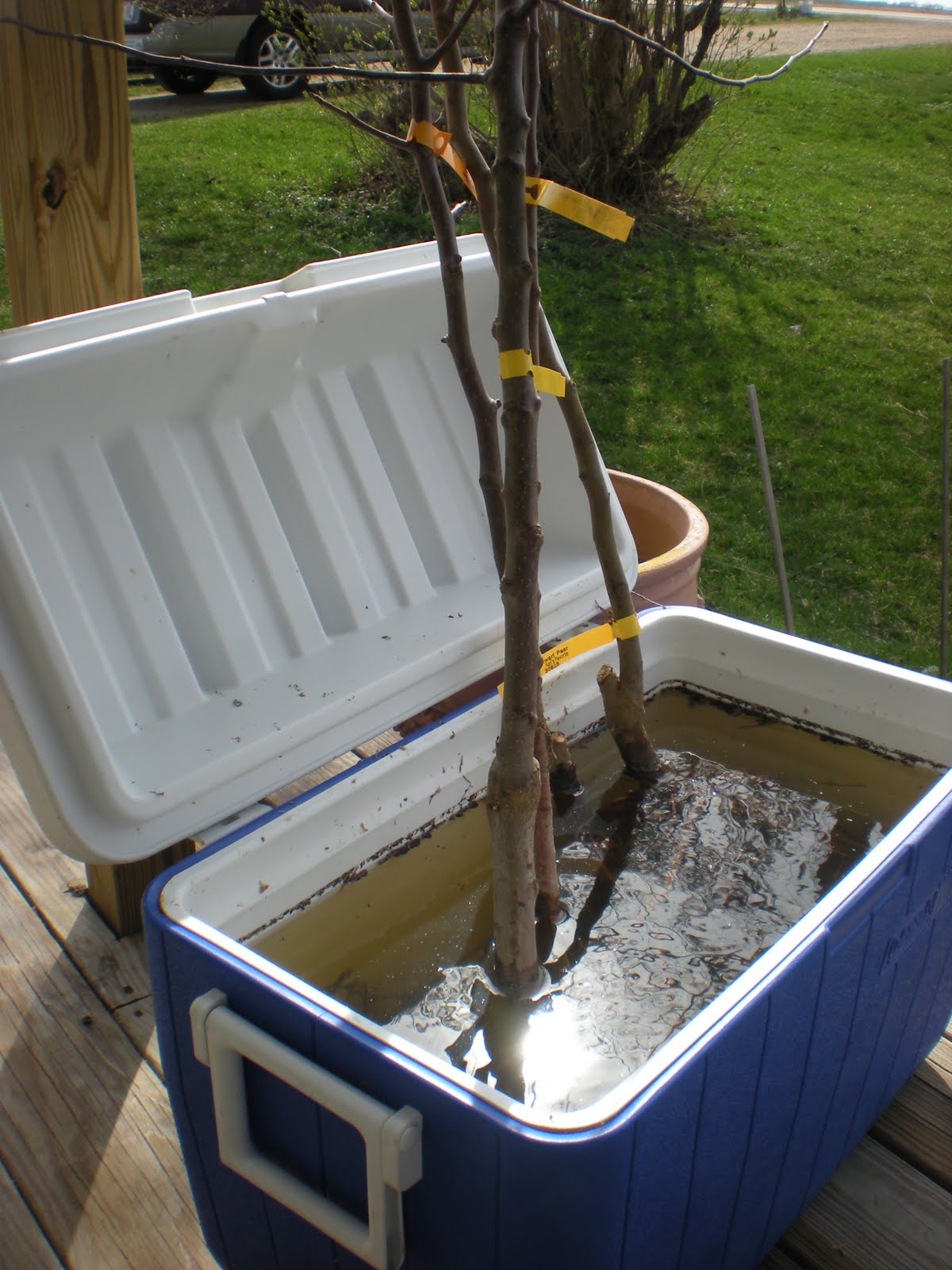
We bought our trees in bareroot form, meaning that the roots are exposed and not bound in soil. We arrived home from Jung’s Garden Store with a plastic bag of these four trees, and then decided we had better figure out how to plant them.
So, how does one plant a fruit tree? We did some reading and research, which gave us a wealth of information. The following lists some of what we found out and the steps we took in order to give our new trees a strong start to life and a future of fruit-bearing!
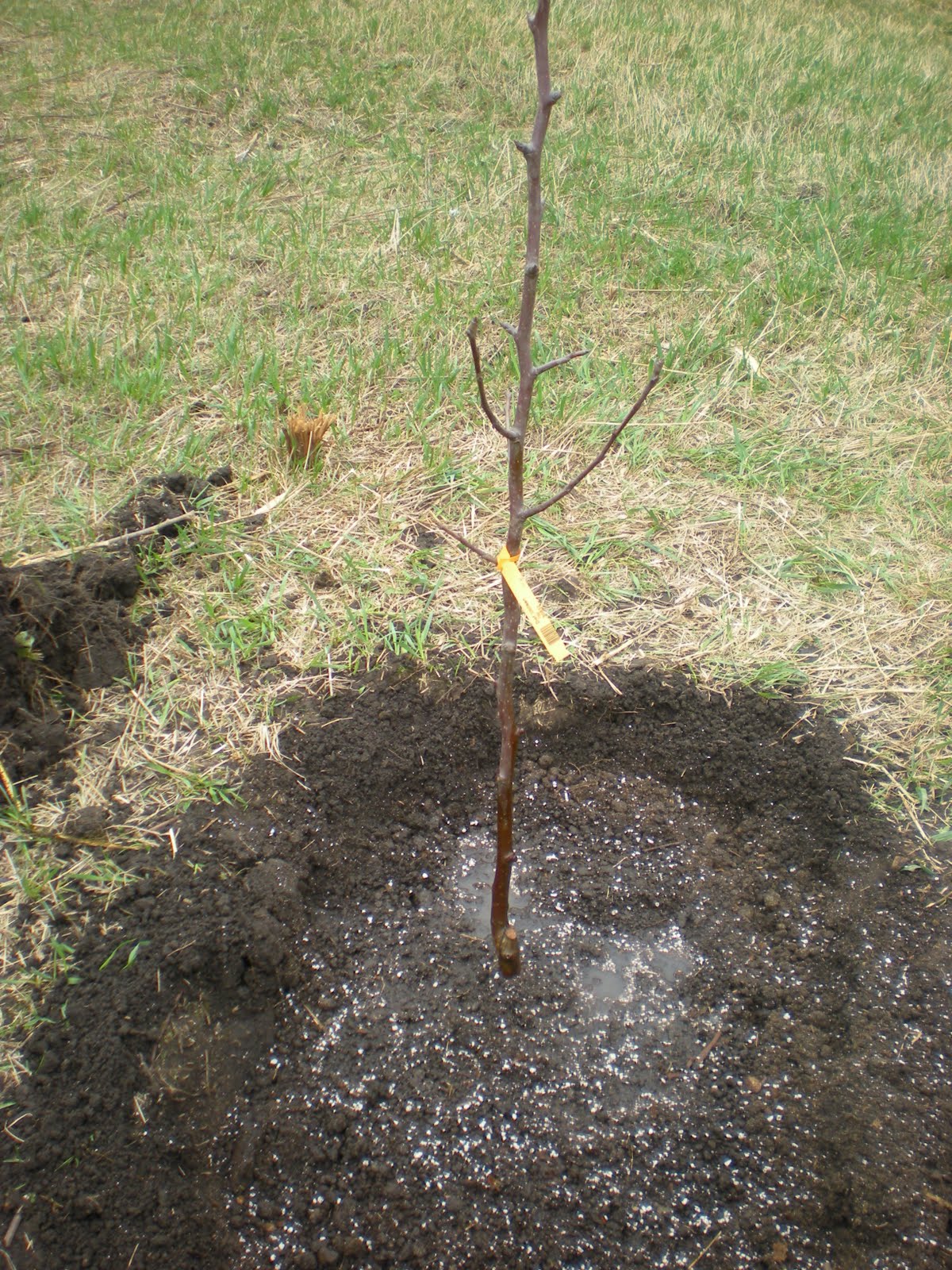
1. Bareroots need to soak in a root stimulator in water for 12-24 hours. We just soaked ours overnight.
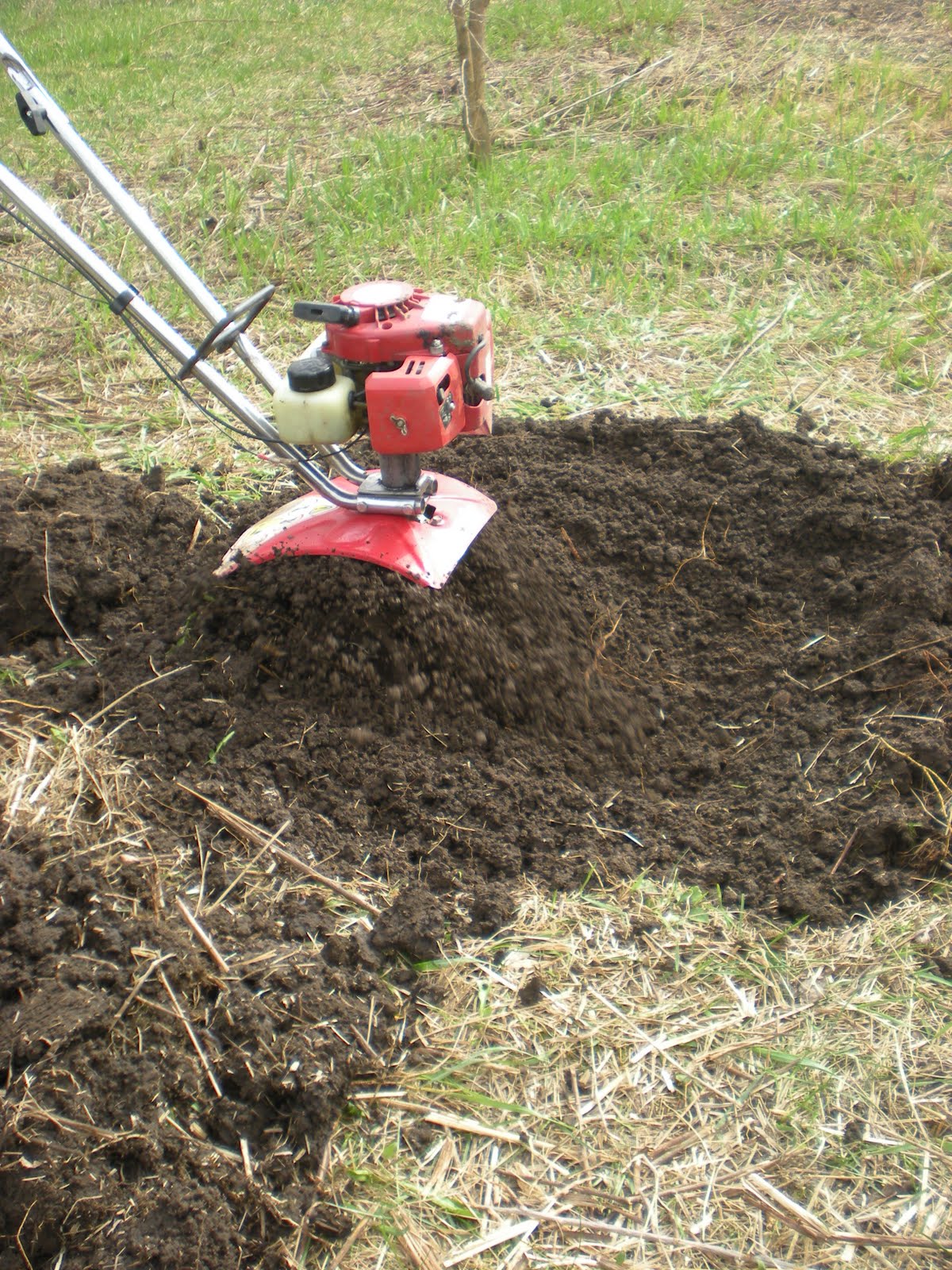
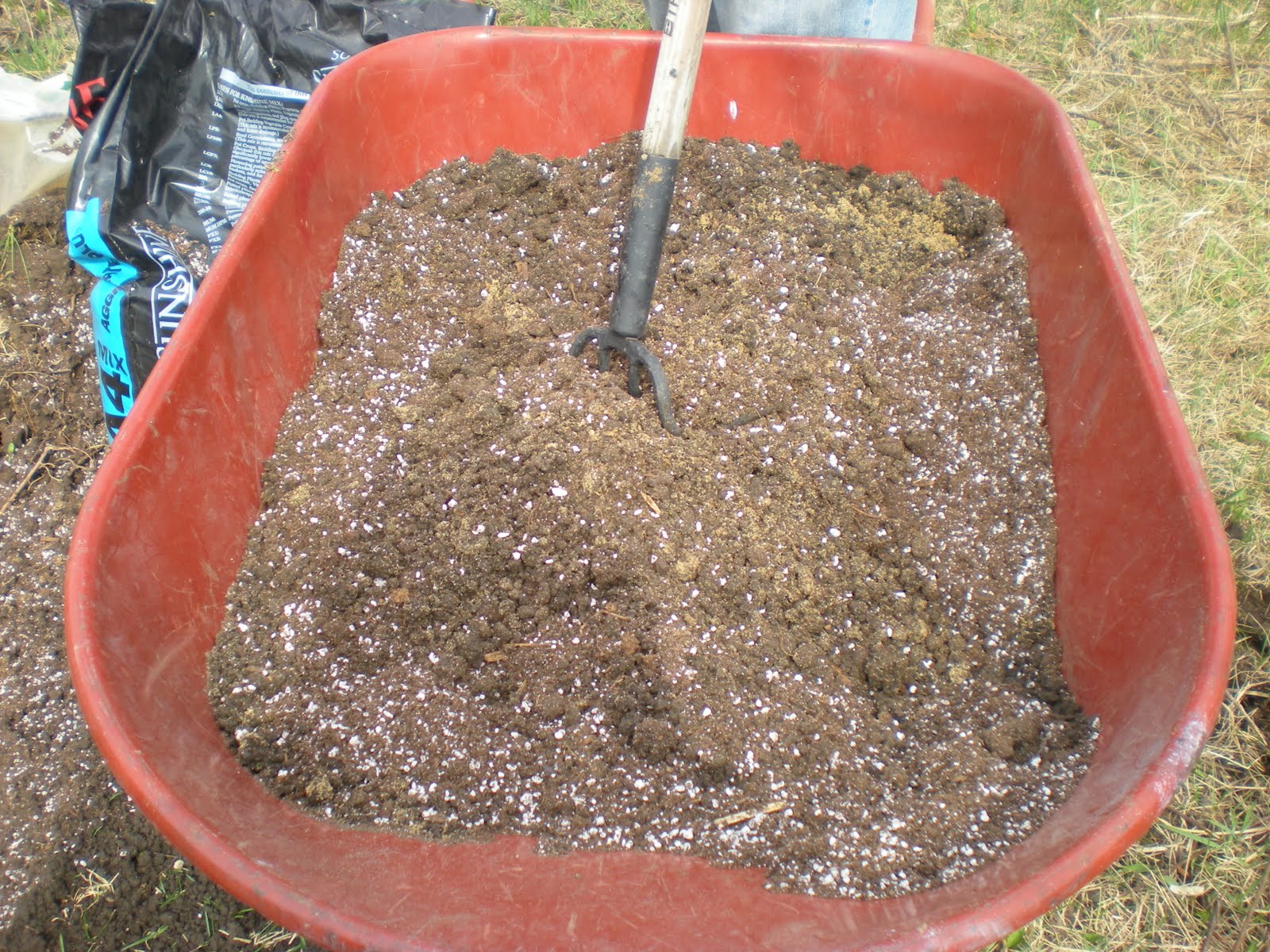
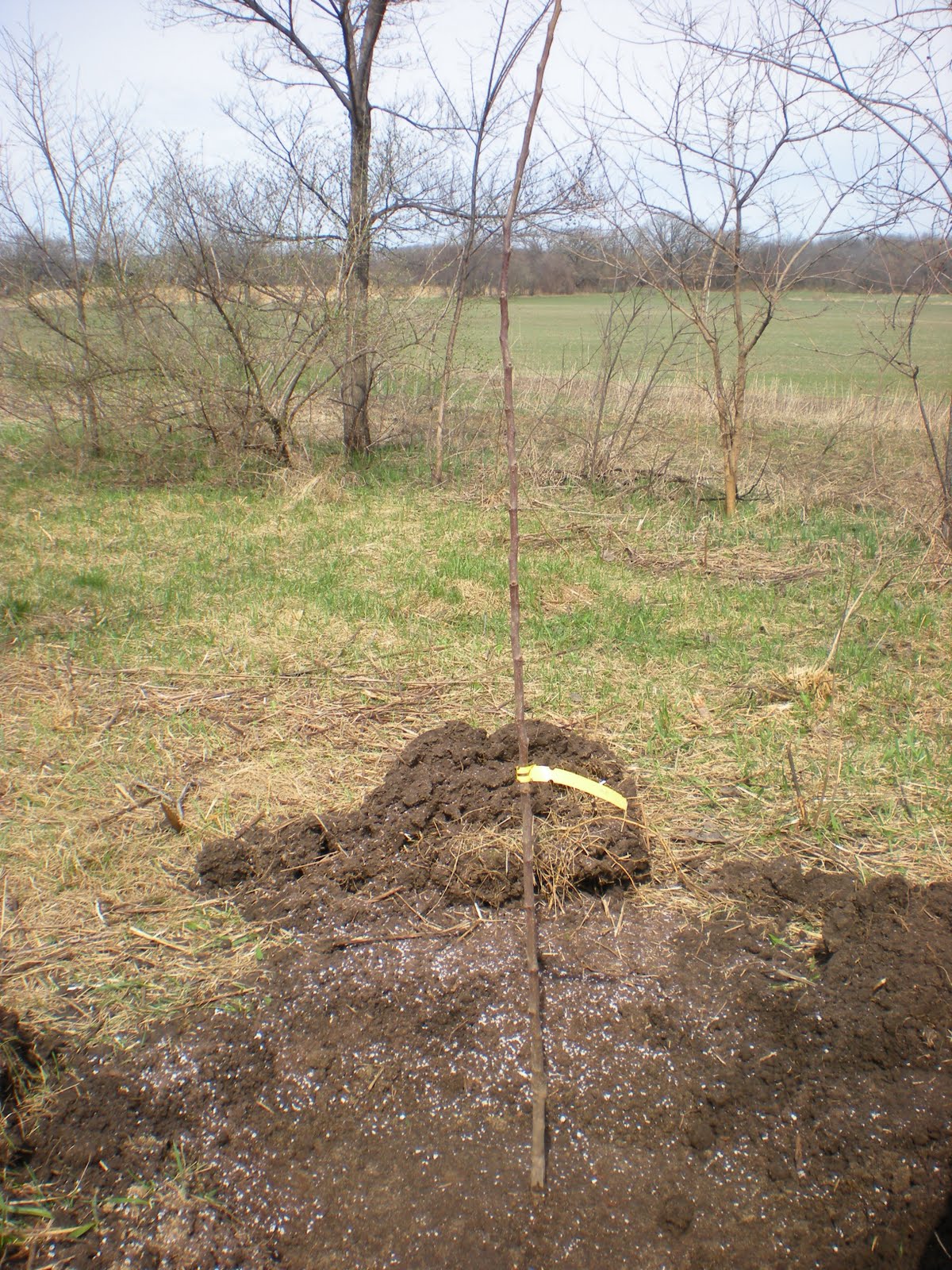
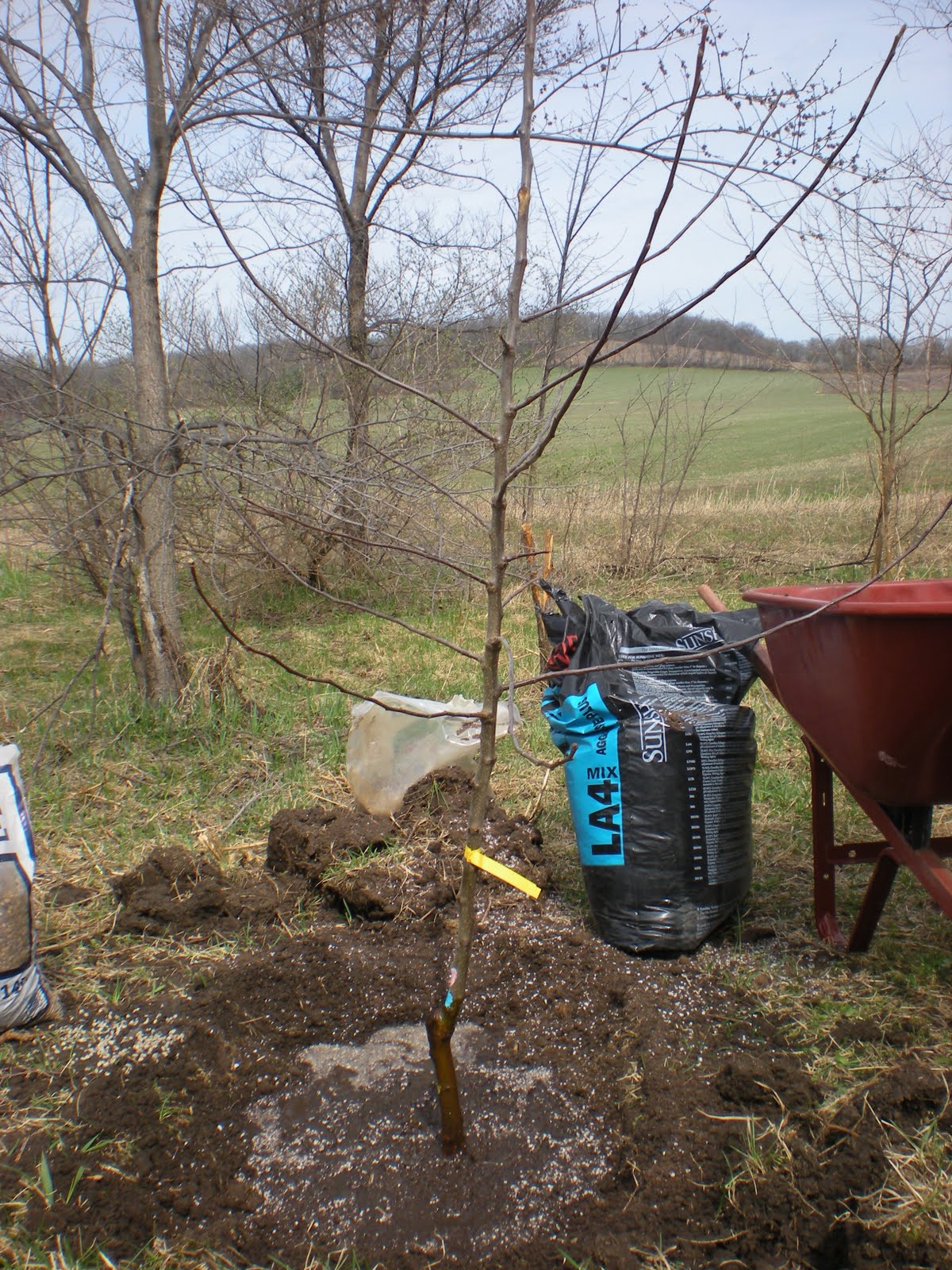
2. Fruit trees like a well-drained, sandy soil. To assist in water drainage, we added a layer of pea gravel before placing each tree in the ground. Our soil is very thick and clay-like, so we added peat and sand to the existing soil and covered the tree roots with that mixture.
3. After planting the tree, it needs immediate water (around 3 gallons). Ours received 2 gallons each immediately following planting. We are to receive rain all week, so our trees will be getting plenty!
4. Young trees need to be staked to provide stability.
We also learned that young trees need to be pruned in order to prevent moisture stress, which is what happens when there are not enough roots to get sufficient water to the very tops of the trees. Learning this was a bit disappointing! The young trees look so robust and proud in the yard; I hate to see them losing height and branches, but what’s needed is needed, I guess. The pruning will happen tomorrow as we got rained out today.
Every year, by January, the Seed Saver catalog arrives. Both of us become starry-eyed with visions of tomato plants, melon patches, and fresh herbs. We pour over the catalog over and over, until the pages become worn and crinkled. Then, February arrives and we finally get to officially make the real order. This year, we plan on adding a few raised gardens, including one solely for tea herbs. Given that we knew our garden space would increase, it was hard to limit our order (and our idealistic and unrealistic visions of a perfectly huge garden), but we eventually managed. Below is what we ordered. We will use these in conjunction with seeds that we had left over from last year and a few fresh herb plants from West Star Farms.
Calypso Beans
Hidatsa Shield Beans
Speckled Cranberry Beans
Detroit Dark Red Beets
Aunt Molly’s Ground Cherries
Scarlet Nantes Carrots
Golden Bantam Corn
Tom Thumb Popcorn Corn
Stowell’s Evergreen Corn
Parade Cucumber
Early Fortune Cucumber
Lacinato Kale
Charantais Melon
Eden’s Gem Melon
Noir des Carmes Melon
Ailsa Craig Onion
Fish Pepper
King of the North Pepper
Gold Medal Tomato
Cherry Roma Tomato
Sunberry
Bee Balm
Hyssop
Stevia
St. John’s Wort
Chelsea Watermelon
And for potatoes…
All Blue Potato
French Fingerling Potato
Rose Finn Apple Potato
In just a few weeks, our house will turn into a blooming crowded “greenhouse.” Florescent lights will be hanging from every free space of ceiling, tables and dressers will be full of trays of seeds, and chairs and other large objects will be set up around the trays to protect them from our kitty predators. And then, soon thereafter, gardening season will officially be here.
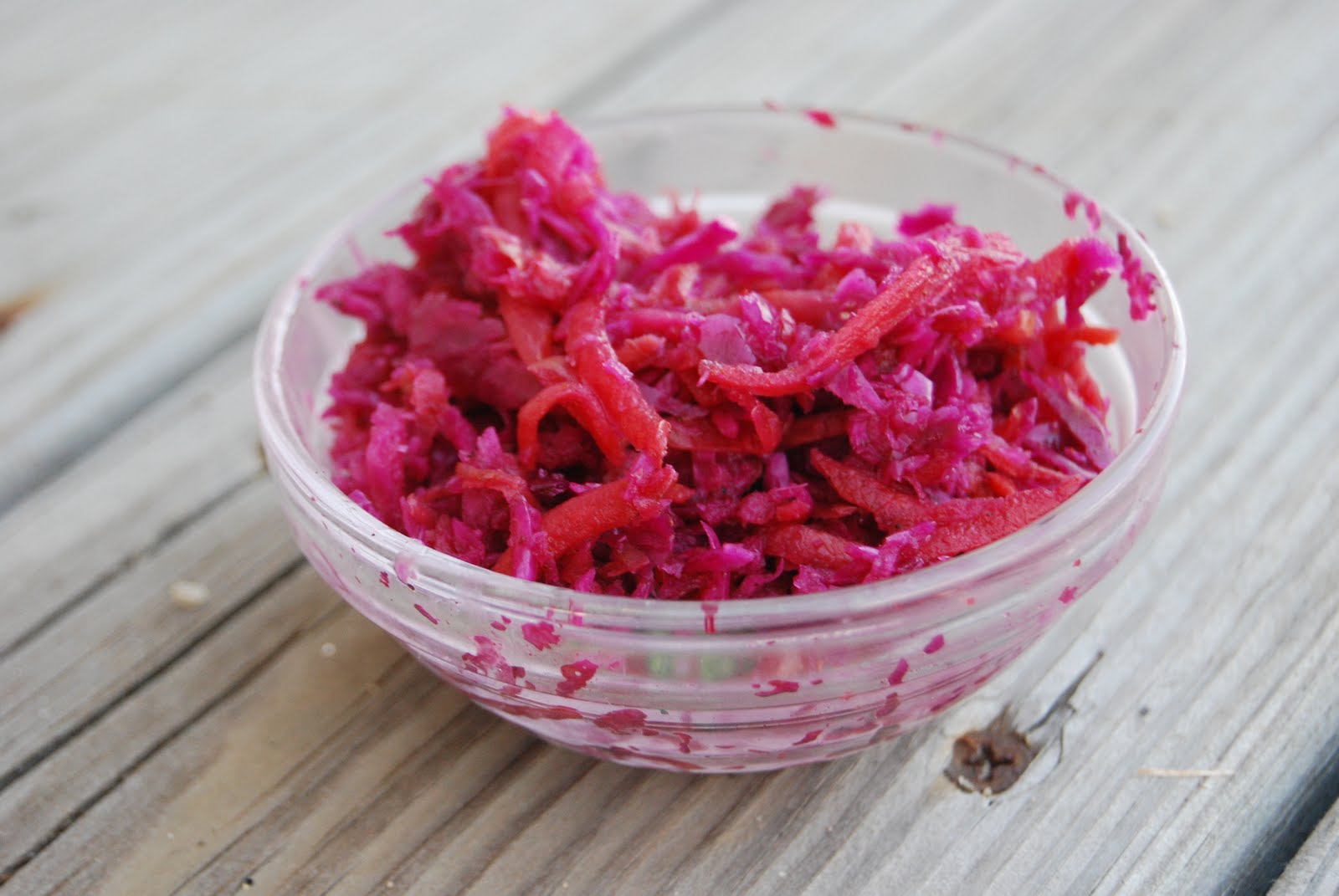
At this time of the year, it can be hard to create in-season, veggie-loaded dishes. It’s always a pleasure to discover some new tantalizing recipe involving winter produce as the season ends and spring begins. Last night, wanting to make something with the cabbage I still had left over from my CSA box, I found a recipe for a red cabbage slaw in From Asparagus to Zucchini that kicks things up a few notches (to quote Emeril!). I modified the recipe a bit, and the slaw turned out wonderfully. Here’s my version:
Red Cabbage Slaw
1 head red cabbage
1 pound carrots
1 bunch cilantro
1/3 cup lime juice
1/3 cup apple cider vinegar
2 Tbs. salt
1 Tbs. ancho chili powder
3/4 cup canola mayo (or to taste) …not included in the original recipe, but added a nice creamy flavor
Quarter and core the red cabbage. Slice cabbage and carrots by hand or in a food processor. Chop cilantro. Toss all ingredients. Let stand one hour; rinse the slaw if so desired. Ours was really salty before the rinse, so we rinsed ours. Serve as a side dish or as a garnish (yummy with fish tacos!).
A few weeks ago, when we made our Garlic and Kale soup, we discovered the wheat berry. Little did we know what a powerful little food we had found. Wheat berries are whole wheat kernels. When ground, flour is created, but as a whole grain, you can use wheat berries as a cold or hot cereal, in salads (as a base or as a garnish), and in soups. Because the grain is whole, and therefore, no nutrients have been stripped away, there are a number of nutritional benefits. Wheat berries are rich in iron, protein, fiber, Vitamin E, and magnesium.
Additionally, wheat berries are so inexpensive! We buy them in bulk once a month and use them every other week for our daily breakfast.
Prepared Wheat Berries
1. Soak wheat berries 4-8 hours (or overnight) with a two-inch covering of water. We soak three cups on Saturday evening which lasts for an entire week’s worth of breakfasts.
2. Drain and rinse the wheat berries. Put into a pot and cover with fresh water, with about an inch covering.
3. Bring to a boil. Reduce heat to low. Finish cooking for 45-60 minutes until wheat berries are tender and a bit chewy.
Wheat Berry Breakfast
1/2 cup cooked cold wheat berries
1/2 cup kefir or yogurt
dash of cinnamon
1 tsp. brown sugar or maple syrup
(optional) 1 Tbs. flax-seed oil
Combine all ingredients. Add desired fruit. In the winter time, we like to add applesauce or strawberries from the freezer. In summer, well the possibilities are endless!
Nutritional Information is based on the recipe WITHOUT flax-seed oil.
|
Nutrition Facts
homemade
Wheat Berry Breakfast |
|||||
|
Serving Size: 1 meal
|
|||||
|
|
|||||
| Amount Per Serving | |||||
| Calories | 230 | ||||
|
|
|||||
| Total Fat | 1.5g | ||||
| Saturated Fat | 0.8g | ||||
| Trans Fat | 0g | ||||
| Cholesterol | 5mg | ||||
| Sodium | 64mg | ||||
| Carbohydrate | 43.4g | ||||
| Dietary Fiber | 8.1g | ||||
| Sugars | 9g | ||||
| Protein | 13g | ||||
|
|
|||||
|
|||||